
 (1).png)
There are lots of interesting things going on in our music and film industries, and we couldn’t be happier to be a part of the action! We’re thrilled that Winnipeg will be hosting the JUNOS in 2027 – more on what that means for the city below.
Manitoba-made Mike & Nick & Nick & Alice and Normal premiered at SXSW earlier this month, and the former will premiere on Disney Plus March 27 (tomorrow!) and the latter in theatres April 17. Netflix’s Little House on the Prairie just announced a second season ahead of its first season premiere in July, and Canadian series Acting Good just announced a fifth season, and will begin shooting the first week of April.
The Academy of Canadian Cinema & Television announced its list of nominations for the 2026 Canadian Screen Awards, and among the nominees are projects that were made in Manitoba, and made by Manitobans. We are proud of the reach and impact of these incredible projects. Congratulations to all! See the full list of nominated Manitoba projects here.
We are proud to help support the NSI Intro to Virtual Production – Manitoba Indigenous Lab. Taking place March 31, April 1 and 2 at StudioLab xR in downtown Winnipeg, the lab introduces participants to the foundations of virtual production and real-time 3D storytelling.
As for the MFM team, this past week we were in Los Angeles at the AFCI Studio Summit, and this weekend we’ll be at the JUNOS in Hamilton – singing the praises of our industries and working to bring business back to Manitoba.
- The team at Manitoba Film and Music

Major news: The JUNO Awards in Winnipeg, April 2027
Earlier this month, the Canadian Academy of Recording Arts and Sciences (CARAS) announced that the JUNO Awards will be hosted in Winnipeg in 2027.
MFM’s CEO & Film Commissioner, Lynne Skromeda, is co-chairing the 2027 JUNO Awards Host Committee alongside Kenny Boyce, Manager, Film and Special Events with the City of Winnipeg. Working with Winnipeg Economic Development and Tourism, the City of Winnipeg, and the Province of Manitoba, we are honoured to have the music industry’s top event back in the city, the first time since 2014.
“The city has grown and changed in a lot of ways since the JUNOS were last here. People are going to come here thinking they know Winnipeg and be surprised,” says Skromeda. “Our downtown has transformed over the last twelve years. The Canadian Museum for Human Rights and WAG-Qaumajuq weren’t even open yet. Our food scene has more hotspots than ever. For people to see all we have to offer will be the real challenge.”
Not only is the JUNO Awards broadcast the biggest televised event of the year in Canadian music, JUNOS Week will spotlight local music and bolster our music economy.
Skromeda explains what an opportunity the event will be: “The opportunities that will come from this week-long event will be considerable – from showcases at JUNOFest to kids content at Junior JUNOS – many ways to experience live music across a variety of genres with lots of opportunities for local talent. The whole of Canada’s music industry will be in the city, and this will also be our chance to shine a light on the venues and the talent from our province.”
This Sunday, March 29th, the 2026 JUNO Awards will be live from Hamilton, Ontario. Learn more about some of our Manitoba nominees in the Winnipeg Free Press. Several members of the nominated Canadian Chamber Choir also call Manitoba home. We send good luck and congratulations to all of the Manitobans nominated.
More to explore:
Mise en Scene and Boy Golden on Exclaim’s list of most anticipated albums of 2026
Faouzia to play Lollapalooza in Chicago this summer
Camryn Dewar explores portrayals of Indigenous women in opera
Dominique Adams talks MFM-funded album To Keep
Musician Shawn Pallister is participating in the Spring session of Canada's Music Incubator's Artist Entrepreneur
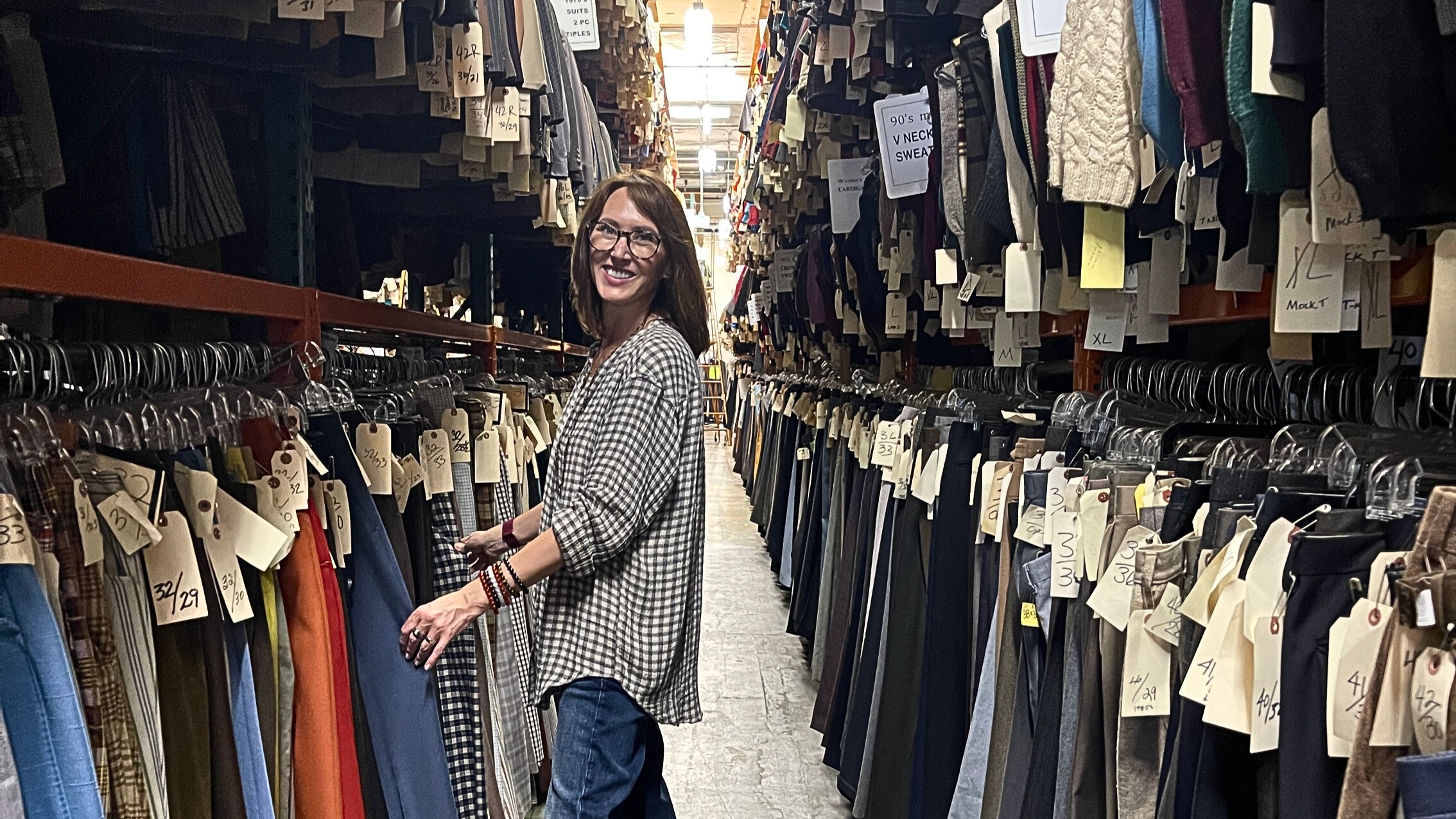
Award-winning costume designer Heather Neale on The Long Walk and what inspires her
On the heels of winning the Canadian Alliance for Film and Television Costume Arts and Design (CAFTCAD) award for Costume Design in Film – Period for The Long Walk, we were delighted to congratulate Heather on her accomplishment, and pick her brain about her experiences working as a costume designer right here in Manitoba.
How did you become a costume designer?
My path began at the University of Manitoba, where I earned my degree in Clothing and Textiles within the Faculty of Human Ecology. Shortly after graduating, filmmaker Jeff Solylo took a chance on me, inviting me to design the costumes for his 70s-era gangster hockey film, East of Euclid. I had absolutely no film experience at the time, but Jeff’s trust opened my eyes to an exciting new industry and an absolute love of creating characters through clothing.
I spent the next few years in the independent world, designing for Jeff Erbach on The Nature of Nicholas and collaborating with Guy Maddin on Night Mayor and Keyhole. Those early projects were my training ground, eventually allowing me to transition into more union productions through IATSE Local 856. Like many in this industry, I worked my way through every possible role in the union—from truck costume supervisor, set supervisor and costume buyer to assistant costume designer—before moving into designing for larger productions. It’s been a steady climb built on a strong work ethic and a genuine love for what I do.
What is it like working in the film industry in Manitoba in particular?
Honestly, working in the Manitoba film industry has been amazing on every level. Early on, Film Training Manitoba (FTM) was such a huge help, providing the kind of hands-on support and training that really helped me climb the ladder. I’m also so grateful to the local producers and directors who took chances on me, trusting my design eye and my ability to lead a team—often while working with very limited resources.
After 20 years in this industry, the Winnipeg crew feels less like colleagues and more like family. Of course, working here has its quirks. Larger cities have so many resources right at their fingertips—endless rental houses, fabric shops, and malls. In Manitoba, you have to be more resourceful and adaptable. I’ve spent years curating my own costume collection just to make sure I have exactly what a story needs.
You won this award for The Long Walk, tell us about your experience on that film. Highlights, lowlights?
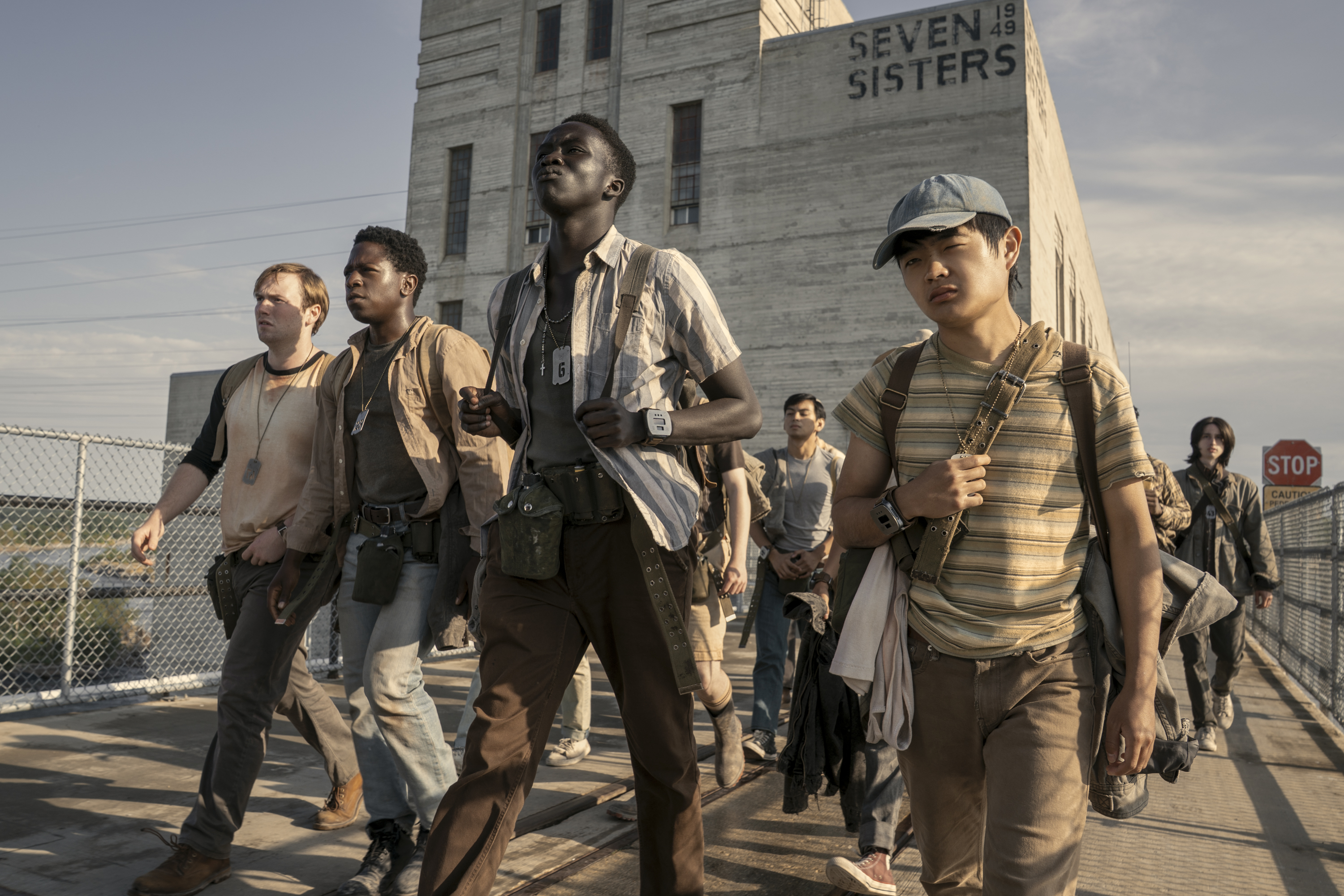
The Long Walk was a truly remarkable project to be part of. On the surface, the costumes seem very simple— jeans, t-shirts, and sneakers—but the real challenge was creating a distinct individuality for each character and then meticulously tracking how those clothes deteriorated as the story unfolds.
The amount of work that went into the aging and dyeing process for the entire cast was immense; it was such a giant part of the show’s visual identity. Our breakdown department was absolutely phenomenal—they had to realistically "weather" the clothing to reflect the dystopian world then the physical toll of the journey, ensuring every stain and tear felt earned. It required an enormous amount of coordination and attention to detail from the entire team.
One of the highlights for me was the sheer scale of the production and getting to collaborate with such a talented crew. We had a very large cast, and seeing it all come together on screen was extremely rewarding.
As for a "lowlight," it’s really just a reality of filmmaking: we shot a massive crowd scene near the end of the film with hundreds of extras in period clothing. We filmed at night using rain towers, and our department had prepared hundreds of pieces for that sequence alone. It looked incredible on set, so it was a little heartbreaking when it didn’t make the final edit! Overall, though, I’m incredibly proud of what we accomplished. This award really reflects the dedication and talent of the entire team.
Do you consider comfort or wearability when you’re designing costumes? Are there sneaky ways that you can make something easier to wear for an actor?
Safety and protection are always the top priority—especially when we’re dealing with the Manitoba elements—but I actually look at "comfort" through a different lens. I would never want to hinder a performance by making a costume too easy to wear. For me, the goal is authenticity.
Sometimes, the "discomfort" of a costume is exactly what an actor needs to find the character. A heavy, chunky boot might be clunky, but it fundamentally changes how an actor walks and carries themselves, giving their performance a physical "twist" it wouldn't have otherwise. The weight of a wool coat or the restriction of a stiff collar can dictate a character’s posture and mood.
Of course, we use "sneaky" tricks like adding hidden thermal layers for those -30°C night shoots or using moleskin to prevent blisters—but if a piece of clothing feels a bit challenging, I often find it helps the actor feel more grounded in the reality of the world we’re creating.
What is something that would surprise people, when it comes to doing your job?
I think people are often surprised by how much of costume design is actually logistics and budgeting. There’s a romantic image of a designer sketching beautiful costumes all day, but in reality, it’s a mix of creativity and a huge amount of organization and problem-solving.
We’re managing large teams, coordinating fittings, sourcing clothing and fabric from all over the world, and keeping track of hundreds—sometimes thousands—of wardrobe pieces. At the same time, we’re responsible for maintaining a budget and making sure those resources stretch across the entire production, from principal actors right through to large crowd scenes. To keep everything organized, we rely on digital tools that help track continuity photos, inventory, and spending.
When you see a big scene on screen with dozens or even hundreds of people, the costume department has carefully planned and budgeted every one of those looks. People don’t always realize how much strategy goes into that side of the job, but when it all works well the audience never notices the effort—they simply believe the world of the story.
What other projects have you worked on in the past that were memorable?
I’ve had the chance to work on some truly diverse projects that each offered their own unique challenges. Goon was a blast because of that gritty, high-energy hockey world, while Channel Zero allowed for some really unsettling, imaginative design. The Ice Road and Ordinary Angels were also incredibly memorable—each required a different kind of research and visual storytelling to make the environments and the characters feel authentic.
Do you have a single favourite costume that you’ve designed, something you look back on proudly?
It’s honestly hard to pick just one because I’m proud of them all for different reasons. Behind every single costume is a hidden story of how it came to be—the "a-ha!" moment during a fitting, the hunt for the perfect fabric, and the incredible team that helped bring it to life. To me, the success of a costume isn’t just how it looks on a hanger, but how it helped the actor truly step into their character and feel like the person they are portraying.
Is there a project you weren’t involved in that really impressed you from a design standpoint?
Watching some of the Oscar-nominated films for Costume Design, the film that really stayed with me is Hamnet. The costume design by Malgosia Turzanska is incredibly thoughtful and beautifully researched. What I admire most is the level of detail—like the use of uncommon textiles (bark cloth) and subtle leatherwork that reflect the world of the characters without ever feeling showy. Work like that looks effortless on screen, but as designers we know how much research and craft goes into achieving that kind of authenticity. It’s something I’m always striving for in my own work as well—that point where the costumes feel completely real and quietly deepen the story.
What inspires you, outside of movies and TV?
I find a lot of inspiration just from watching people. I’ve always loved observing how people actually live in their clothes—the little ways something gets worn in over time, or how someone styles a piece to make it completely their own or individualizing how a uniform is worn (something we often try to do).
I’m also very inspired by vintage clothing and history. I love looking at old garments and imagining the lives that were lived in them. The fabrics, the construction, the way something has aged—all of those details tell a story. As a costume designer, I’m constantly noticing those things and mentally collecting them. Later on, they often find their way into the characters I’m building. Those small, real-world details are what give costumes a sense of authenticity and soul.
Manitoba Film and Video Production Tax Credit Updates
Manitoba’s 2026 Budget reinforces the province’s position as one of Canada’s most competitive jurisdictions for film and video production. New administrative enhancements to the Film and Video Production Tax Credit will include the introduction of a mandatory pre-certification process to improve predictability and forecasting, alongside measures to reduce the potential for abuse and fraud and enhance overall program administration. Notably, the changes will also allow eligible non-resident labour costs to be included in advance certificates, giving producers earlier access to tax credits on approved deemed labour for multi-year productions. Together, these updates are intended to improve administration, strengthen program integrity, and support continued growth in Manitoba’s film and television industry. Further details are expected later in the fiscal year.
More to explore:
The Hollywood Reporter on Manitoba-made wilderness survival film Hair of the Bear
Janelle and Jérémie Wookey listed among Canada's Producers to Watch
Kristen Sawatzky named ACTRA Manitoba's Woman of the Year
MFM Programs
Music – Promote Program open to applications: Open now
Music – Perform Program open to applications: Open now
Music – Produce Program: Deadline May 21
Music – Produce (Out-of-Province Artists) Program: Deadline May 21
Film & TV Funding Programs: Opening April 1, 2026
Partner Opportunities
Canada Pavilion at the Marché du film: Deadline April 9, 2026 (via Telefilm)
Telefilm’s Talent to Watch Program: Open for submissions April 14 to 28
Manitoba Music’s Safer Studios Respectful Workshop Training: April 15
21st WNDX Festival of Moving Image submissions: Deadline April 30
Black Watch Entertainment’s Pitch Day Manitoba for unscripted content: May 6 to 8
Spotlight
The Canadian Society of Cinematographers (CSC) and Film Training Manitoba (FTM) launch the first Prairie-based CSC Hub. The hub will provide opportunities for professional engagement, as well as skill development and training, and be located in the FTM headquarters in the Exchange District.
Get this news delivered straight to your inbox each month! Subscribe to our newsletter.