
 (1).png)
Friends and colleagues,
We are as delighted as anyone about the warm weather (finally!), and the exciting things happening in our industries.
We checked in with the Manitoba Documentary Archive, which continues to grow, now with 27 films, 3,310 subscribers, and over 320,000 views since launching 6 months ago. New films to check out include Closing Time: The Vanishing Prairie Beverage Room and Going - Remembering Winnipeg Movie Theatres.
Manitoba-made film A. Rimbaud portrays the life of French poet Arthur Rimbaud and uses musical instruments to represent the other characters in his life. The film is currently screening at the Roxy Theatre in NYC, and is getting rave reviews. MFM is proud to have supported the unique film.
The TD Winnipeg International Jazz Festival is only a couple of weeks away (June 16-21), be sure to check the lineup and get your tickets.
The Winnipeg Free Press recently wrote a roundup of some recent locally-filmed TV shows and movies. It’s nice to see the wealth and variety of the work all summed up in one place. Read that article here.
Manitoba talent will be taking the stage at the Banff World Media Festival, June 14-17! If you’re attending, be sure to explore the sessions featuring Manitoba speakers, showcasing our province’s screen industry.
Until next time,
The team at Manitoba Film & Music
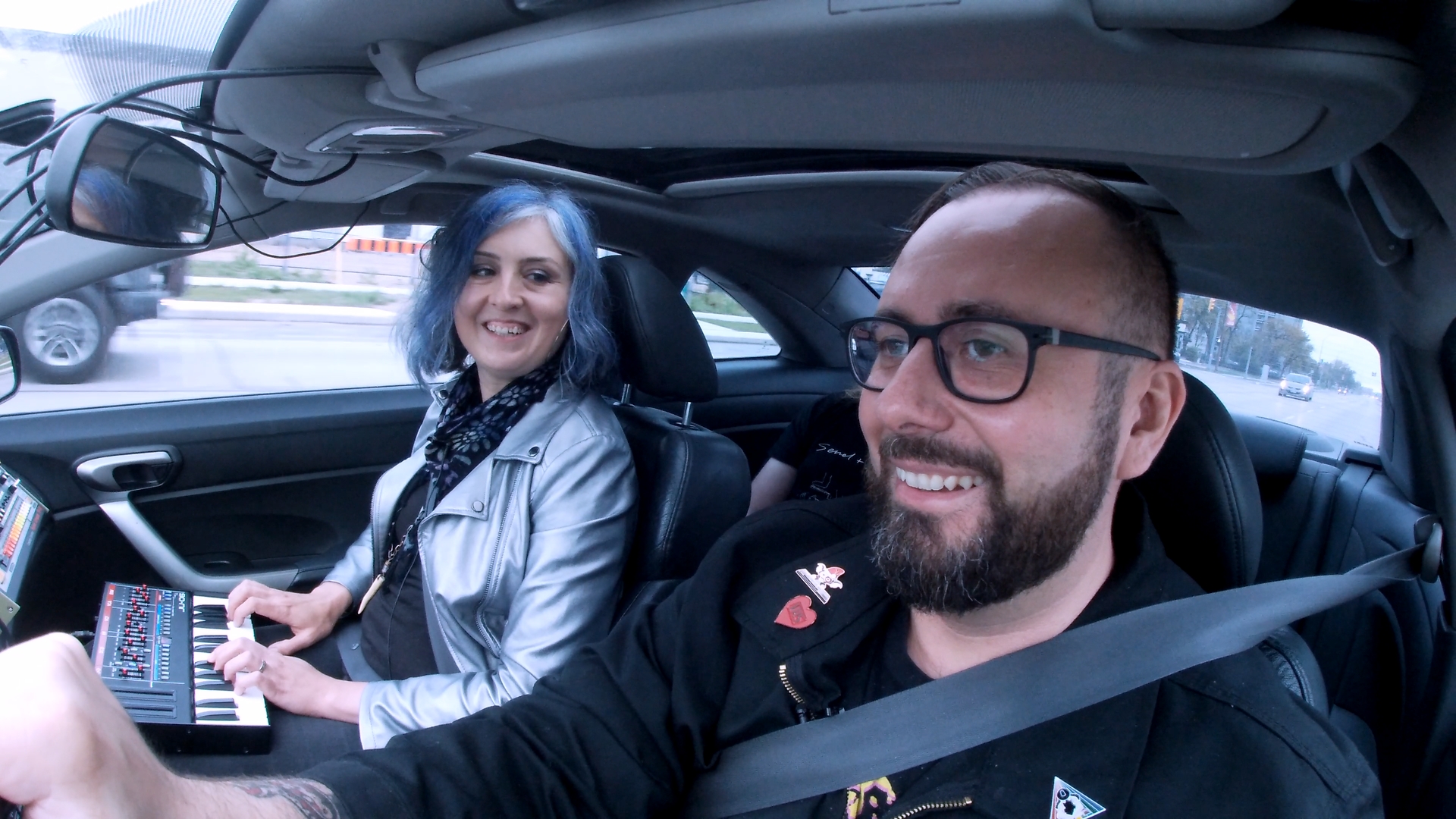
A look at the music documentary series Dash Jam – created by Jaimz and Karen Asmundson
Dash Jam is a documentary series celebrating the diversity and talent of Winnipeg’s music community. Across 13 episodes, local musicians are interviewed while being driven through the streets of Winnipeg, offering candid conversations and a unique portrait of the city’s vibrant music scene. The series will debut at the Dave Barber Cinematheque on June 12.
The series was created by Jaimz and Karen Asmundson. Jaimz passed away midway through production. Jaimz was a talented filmmaker, musician, and the programming director of the Dave Barber Cinematheque.
MFM is proud to have supported the project through our Emerging Talent grant program.
We talked to Karen about the creation and completion of the series, and how it became a tribute to her husband.
Where did you get the idea for the series?
The genesis of Dash Jam is a journey on its own, and largely the journey of Jaimz’s relationship with transportation. When I met Jaimz, he had a very small geographical world which included downtown and Wolseley, and he was satisfied with that. He would take the bus or walk wherever he had to go. So, then I hijacked his life. Since I was kind of a hippy bike punk, gradually Jaimz started to open up to the idea of cycling. We got him this red bike and I taught him how to ride it. He was 21. Flash forward about 15 years, and Jaimz and I had started our band Ghost Twin, and we were touring a fair bit. Jaimz had never learned to drive, so I was always the driver. I think it was somewhere on the long drive between Sudbury and Ottawa that Jaimz turned to me, saying “this isn’t fair, is it”? I agreed with him. It was then that he pledged to learn to drive. It took a while, but he was true to that promise. He then bought his first car. He loved that car, and loved working on it like an amateur mechanic. He installed a touchscreen and modded it out so you could watch VHS tapes on it.
[Eventually] Jaimz came up with the idea for Dash Jam. It was a way to use his car as a film set and bond with local musicians. It also allowed him to tinker around with his car to allow synthesizers to play through the stereo system. It was a fun and engaging idea that let Jaimz combine his multiple interests.
Why did you decide to feature musicians?
The idea of featuring musicians comes from our experience of touring with our band Ghost Twin, and how the “coerced bonding” of close quarters in a car for hours can make for some interesting conversations. There were relatable stories Jaimz could tell to open up the conversation, as he was a musician too. And the act of playing with the synthesizers gave an extra layer to the experience, giving the musicians something to keep their hands busy and creatively engaged.
I understand it took a couple of years for this all to come together, what was that process like?
I was on the sidelines of Dash Jam during its initial production phase, although I did help out with a few episodes, notably the one where I was the interview subject and then a later one where Jaimz asked me to handle the interview with Sam Sarty of Living Hour. Beyond that, Jaimz did his best to edit the episodes but wasn’t counting on the impact the pandemic would have on his life and workflow. He did his best but wasn’t able to complete all the edits before his untimely passing in 2024.
That’s really where my Dash Jam story begins. When Jaimz died, I felt so lost. Dash Jam was one of many things that felt stabilizing to me. I knew it was really special and important, and it had to be shared.
How did you go about stepping into the role of producer on this project?
I contacted Ryan Simmons, who had worked with Jaimz on the production phase, and we made a plan to get it done. Ryan created written transcripts of the footage that we could use to map out how to edit the content. I watched everything and highlighted what I thought was the best stuff that would fit together into a flowing conversation. We gave these paper edits and footage to some talented editor friends, including Marc Greene and Craig Guiboche.
I learned to edit as well, which was its own journey. I took a class at Winnipeg Film Group in DaVinci Resolve and was accepted into the Deep Dive mentoring program through Film Training Manitoba (in partnership with Doc Manitoba). I was surprised at how much I love editing! I never expected to learn it because I was married to a professional editor for 20 years, so it never felt necessary until he was gone. Alison Hain, who was also a featured guest on Dash Jam (as well as helping me to reform Ghost Twin along with Pat Short), helped with some of the post sound, and I completed some of that myself as well. It took close to two years to complete all the episodes but eventually it all came together.
What episode surprised you the most?
The two that surprised me the most were the ones featuring Venetian Snares (Aaron Funk) and also the one with Mutable Body (Alison Hain). I remember after Jaimz did the interview with Aaron, he was complaining a bit, worried that Aaron didn’t really like answering questions and wondering if the footage would be useable. When I dug into editing it, I found it was absolutely amazing and full of insightful and hilarious moments and was such a pleasure to cut together. The interview with Alison was cut by Craig Guiboche, who has incredible skills. It gave a sense of Alison’s depth of character and calming presence, and their phenomenal skills with synthesizers and music software. I had met Alison a few years before, but they had fallen off my radar. Seeing this episode inspired me to go see Alison’s next Mutable Body performance. That then inspired me to ask Alison to help me with some music software issues I’d been having, which led to them helping me reform Ghost Twin in 2025. It’s amazing how life connects the dots for you sometimes.
Watch the full series live:
Dave Barber Cinematheque
June 12 @ 6 p.m.
Learn more about the event and get your tickets here.
The series will be released over the next few months on YouTube.
More to explore:
American Cinematographer on Manitoba-made Normal’s dazzling action scenes
CBC’s New Indigenous Voices program includes six Manitobans
Congrats to the Manitobans selected for Shine Network’s 2026 mentorship program
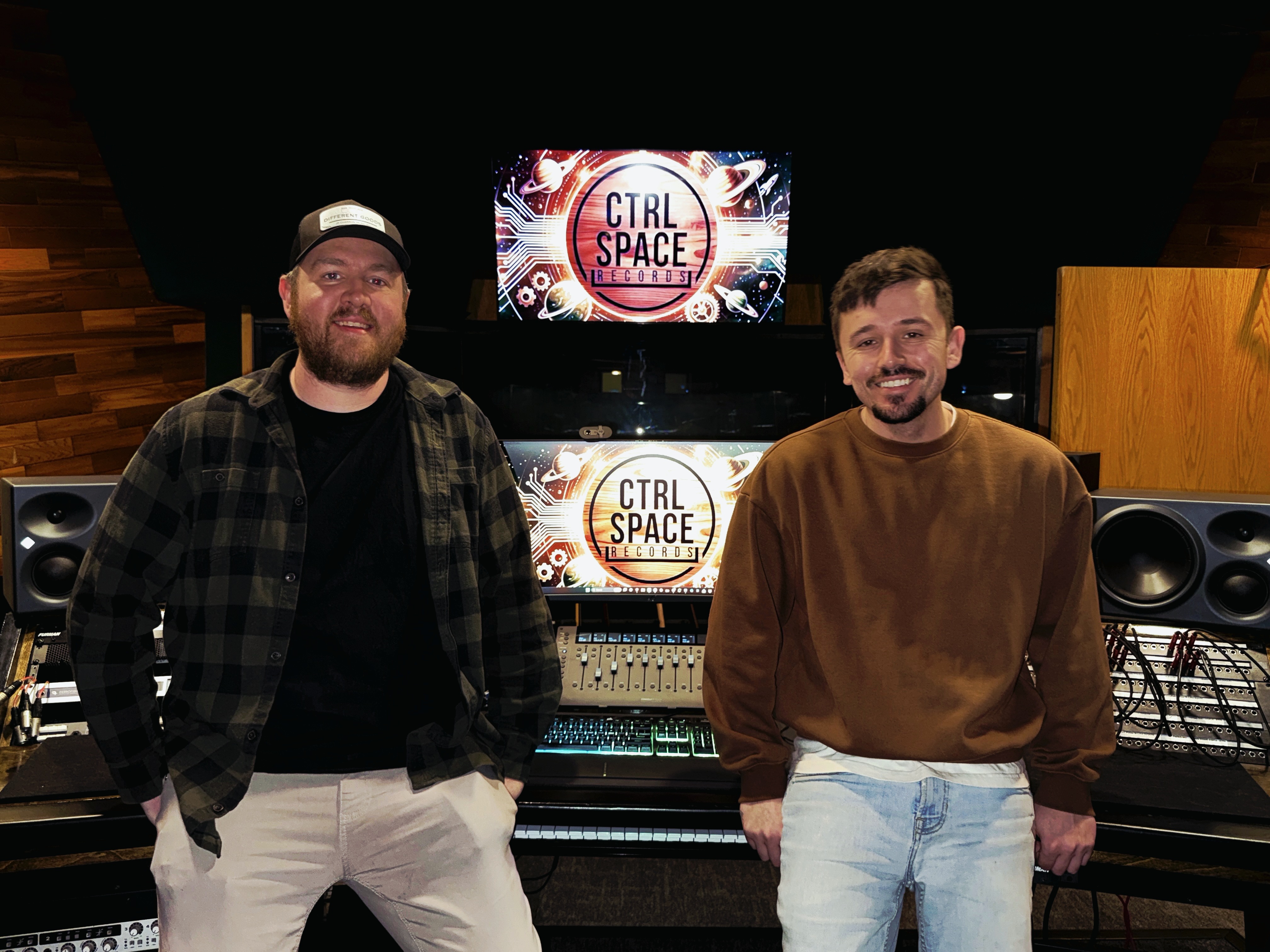
CTRL Space Records talks MFM Build program funding
MFM’s Build program is designed to encourage the growth and development of local music companies by providing financial support for costs associated with increasing capacity, improving industry skill levels and developing infrastructure.
We want to support the businesses whose business it is to create great music.
One recent recipient of Build funding is CTRL Space Records, who used the funds to help expand their business.
"The MFM Build program gave us the financial foundation needed to push CTRL Space Records to the next level,” explained Derek Benjamin of CTRL Space Records.
CTRL Space has moved into a new facility and expanded their offerings over the past year. They’re happy to have more space to host meaningful collaborative work, which has included writing camps, and offer a ‘home base’ for their partners. They’ve also recently begun operating as a licensing agency, and have been working to place local music into commercial productions and films.
All of this growth comes with additional costs. Benjamin explains, “We used the Build funding to cover operational costs during our expansion and, most importantly, to invest in custom software development to manage our catalog and track royalties. Ultimately, the grant didn’t just provide stability, it modernized our infrastructure, allowing us to support and grow our roster of artists.”
When asked what advice he’d offer on the Build program application process, Benjamin said, “my best advice is to be incredibly clear and intentional with your business goals. Funders want realistic evaluations and they need to see that you understand your market, costs, and timeline… Juries invest in your work ethic just as much as your vision, so you need to show some initial traction.”
Applications for MFM’s Build program is open now. Deadline to apply is June 18.
More to explore:
New music to check out: Neighbour Andy, Man of McGill; YSN Fab, B2B; Sam Singer, Jacob
2026 TD Winnipeg International Jazz Festival – June 16-21
Check out Manitoba Music’s New Music Night – June 11
MFM Programs
Music – Build Program: Deadline June 18
Music – Promote Program open to applications: Open now
Music – Perform Program open to applications: Open now
Music – Produce Program: Deadline Sept. 17
Music – Produce (Out-of-Province Artists) Program: Deadline Sept. 17
Film & TV Funding Programs: Open now
Partner Opportunities
Manitoba Emerging Filmmakers Festival: May 29 – 31
Spotlight
We are thrilled to announce we are partnering with the Indigenous Screen Office (ISO) to introduce the Manitoba Indigenous Short Film Fund, a new funding initiative that will award three Manitoba filmmaking teams up to $20,000 each to produce a short film. This fund aims to amplify the unique voices of Indigenous storytellers and creative prairie-based talent, contributing to the professional development of emerging and mid-career writers, directors, and producers.
Get this news delivered straight to your inbox each month! Subscribe to our newsletter.